

Culture is the risk that no one underwrites
We turn culture into data, and measure whether an organization can actually deliver the plan it has committed to.
You only see what gets reported
There is a real limit to what a CEO, or any board, can see clearly about an organization. Information gets filtered upward, and what reaches you is often shaped, consciously or not, by what people think you want to hear.
That means averages can hide the real story. A company can have a healthy “survey score” and still carry serious misalignment between leadership and everyone else.
In our experience, it can take 12 to 18 months for these problems to show up in EBITDA. By the time the numbers move, the timeline has already slipped.
WHAT WE DO
Can the organization deliver what's next?
Every CEO asks that question daily. Few can answer it with evidence.
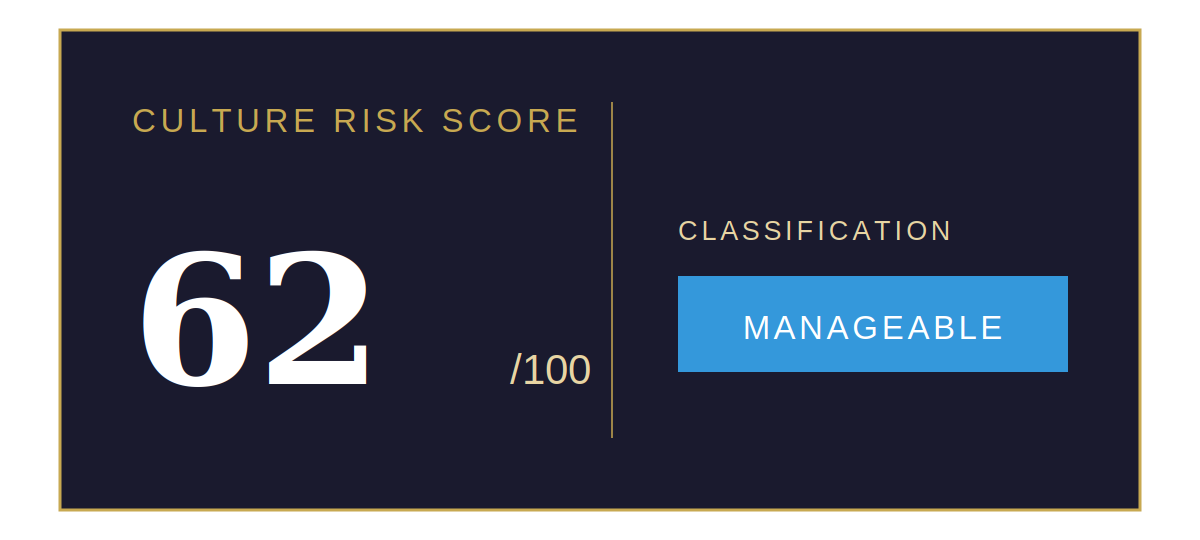
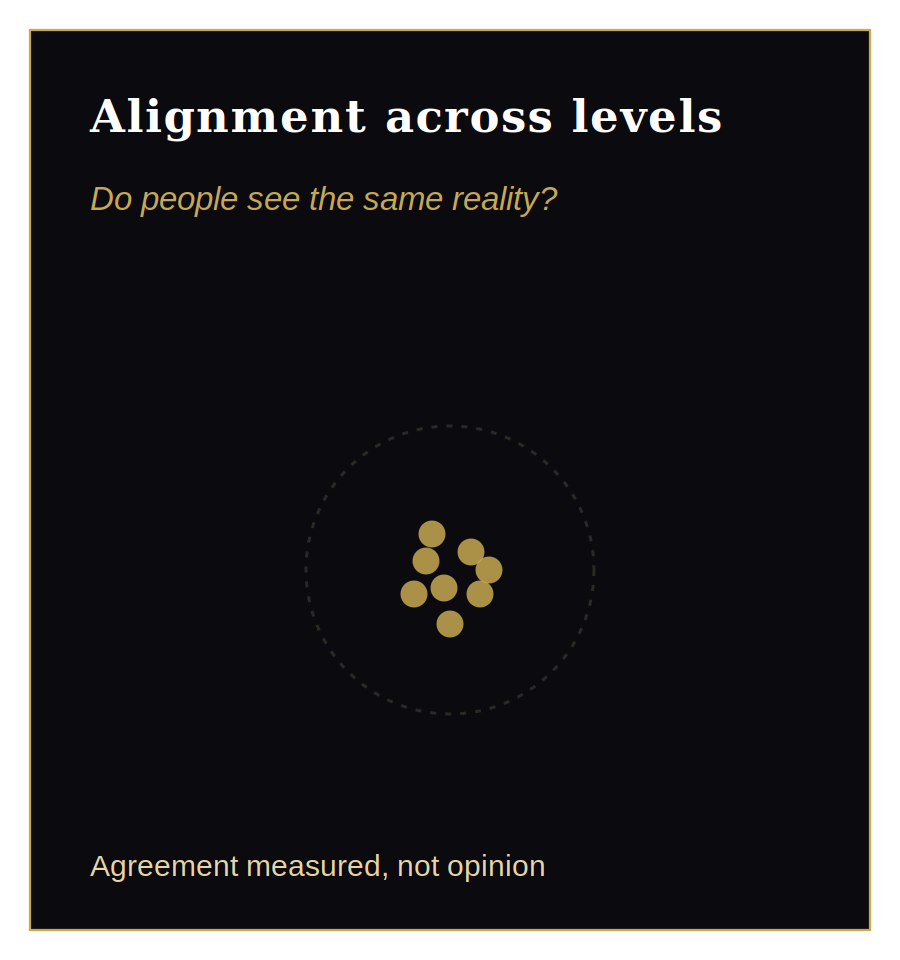
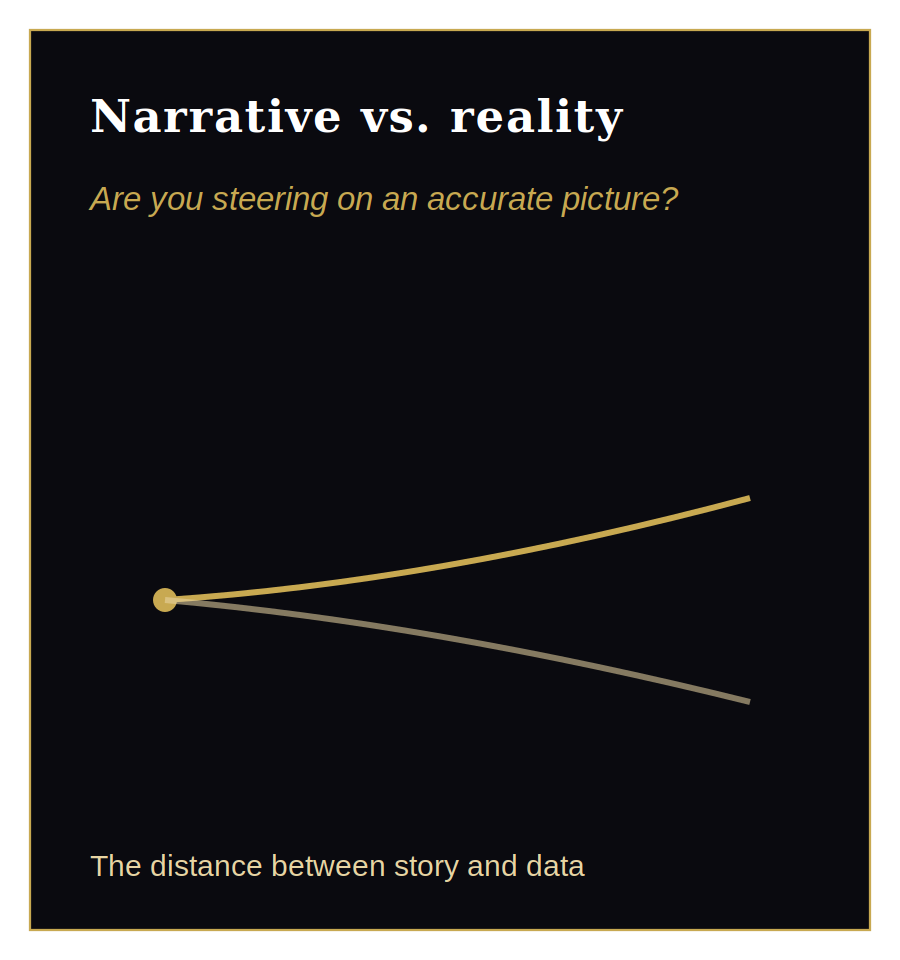
TRAMA reads how decisions actually get made, where execution breaks down, and whether the picture at the top matches what is happening three levels down. Then it turns those signals into a straight answer,
Culture surveys measure how people feel. TRAMA tells you whether the company can deliver the strategy at the pace the plan assumes, with the alignment it requires.
How the model works
The model draws on structured interviews across leadership and the organization, focus groups, and select external data.
Those signals run through independent analytical lenses and are triangulated. Where they align, confidence rises. Where they contradict, the contradiction itself is a finding. What comes back is a brief to act on.

THE FRAMEWORKS
What we measure, and what you receive
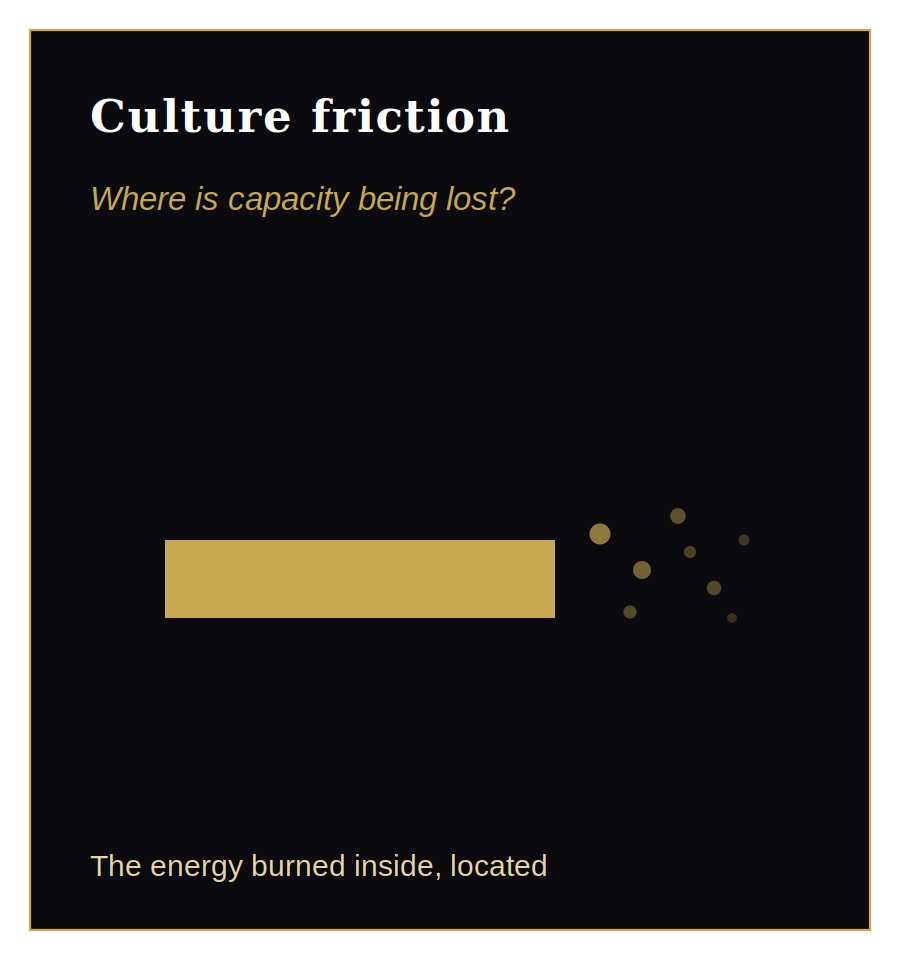
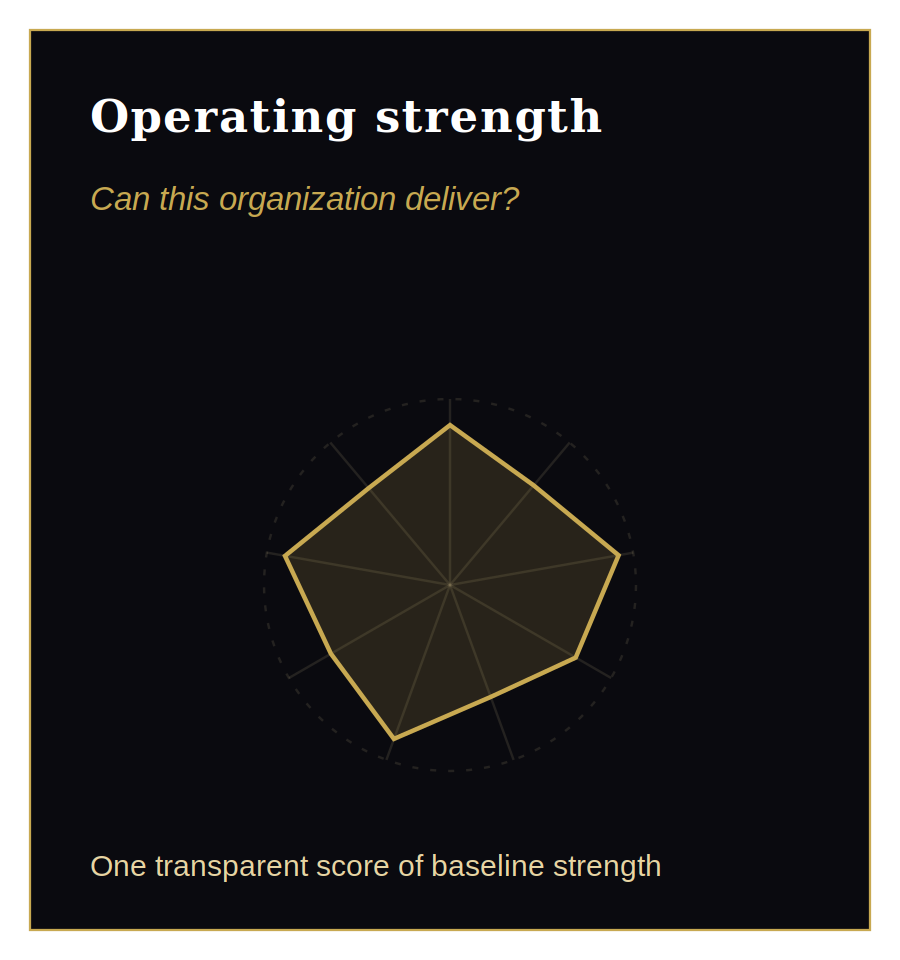
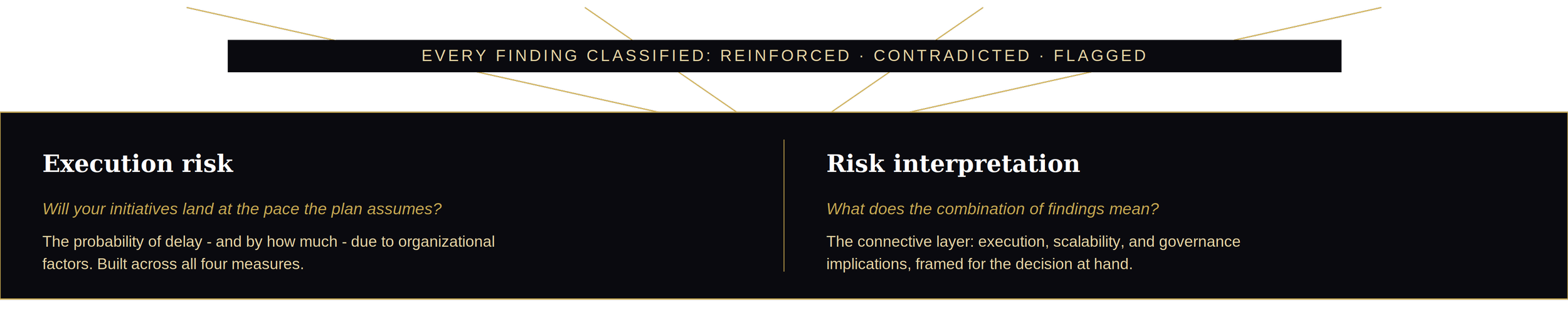
Four independent measures, each answering a question you need to act on, with two additional outputs built across them.
THE TRIGGER
When things take longer than planned
A transformation that is stalling.
An acquisition that is slower than modeled.
A picture of the organization that no longer matches reality.
FOR YOUR SITUATION
Differents situations, same tool
For private equity firms
Pre-investment
Risk visibility before you sign, with findings you can defend point-by-point in the investment committee.
Post-investment
A baseline for the value creation plan, re-measured to show whether the organization is actually moving.
Pre-exit
Independent evidence that the organization can deliver the plan your buyer is underwriting.
For boards and CEOs
A clear view of where the organization is losing energy, beyond the engagement survey.
An early signal on leadership and succession risk, before it becomes a headline problem.
A structural way to separate real cultural change from a slogan on the wall.
Frequently asked questions (FAQ)
-
Surveys measure engagement and wellbeing - how people feel. TRAMA measures execution capacity - how the organization will behave when strategy puts it under pressure. High wellbeing and high execution risk can coexist, and that combination is precisely the hardest to detect.
-
Very likely, and that read is irreplaceable. There is still a structural limit to visibility three or four levels down. TRAMA measures precisely that gap, which is a system effect present in every organization above a certain scale.
-
That is the best timing. A transformation showing resistance is exactly where TRAMA adds the most value: it locates where resistance is concentrated while there is still time to act.
-
Not in time. In our experience, execution problems reach EBITDA 12 to 18 months after they emerge in the organization. TRAMA shows the signal while it is still possible to do something about it.